Buying an engagement ring is one of the most meaningful purchases most people will ever make — and one of the most confusing. Walk into any jewelry store or open any online retailer and you'll be immediately confronted with an avalanche of options: round versus oval, lab-grown versus natural, platinum versus white gold, pavé versus solitaire. It's a lot.
The good news: you don't need to become a gemologist to make a great choice. You just need a clear framework, a few key facts, and the confidence to trust your instincts. That's what this guide is for.
"An educated buyer is a confident buyer. The goal isn't to know everything — it's to know the right things."
Step 1: Set a Realistic Budget
Before you look at a single ring, decide on a number. Not a range — a number. The traditional "two months' salary" rule is a marketing invention from the 1940s, and it has no bearing on what you should spend. What matters is what you can comfortably afford without financial stress.
Here's what current data tells us about what couples are actually spending in 2026: the most common range is $3,000 to $6,000, with an average of approximately $5,200. That said, meaningful rings exist at every price point. A $2,000 ring bought with intention and knowledge is worth far more than a $10,000 ring bought in confusion.
Once you have your number, resist the urge to "stretch" it. A good local jeweler and a good understanding of the market can get you a remarkable ring at almost any budget.
Step 2: Understand the Four Cs — But in the Right Order
You've likely heard of the Four Cs: Cut, Color, Clarity, and Carat. Here's the honest truth about their relative importance:
Cut — The Most Important C
Cut determines how a diamond interacts with light — its brilliance, fire, and sparkle. A well-cut stone will look dramatically more alive than a poorly cut one, even if the poorly cut stone has better color or clarity grades on paper. For round diamonds, prioritize Excellent or Very Good cut grades. Don't compromise here.
Carat — The Most Visible C
Carat refers to weight, not size — though the two are related. This is what most people instinctively focus on, and it does affect perceived size. However, carat weight is also the fastest way to blow a budget. Many buyers have found they can step down in carat (say, from 1.5ct to 1.35ct) with virtually no visible difference at a meaningful price reduction.
Color — Where Smart Buyers Save
Diamond color is graded D (colorless) through Z (light yellow). For most ring styles, color grades G through I appear virtually colorless to the naked eye, particularly in a setting — yet cost considerably less than D–F stones. In yellow gold settings, even a J or K color can look beautiful. This is often where the best value lies.
Clarity — Often Overrated
Clarity grades refer to internal inclusions and external blemishes. Here's a practical truth: inclusions only matter if you can see them without magnification. Most people dramatically over-invest in clarity. VS2 and SI1 grades are typically "eye-clean" at a significant saving over VS1, VVS, and Flawless grades.
Step 3: Choose Your Diamond Type
The single biggest decision in the modern engagement ring market — and the one that will most dramatically affect your budget — is whether to choose a lab-grown or natural diamond.
Lab-grown diamonds are chemically, physically, and optically identical to natural diamonds. They're not simulants or imitations. The difference is origin: one forms over billions of years underground, the other is created in a controlled environment over weeks.
The price difference is significant: a comparable lab-grown diamond typically costs 80–90% less than a natural diamond. Many couples use this to purchase a meaningfully larger or higher-quality stone for the same budget. Others prioritize the rarity, tradition, and resale characteristics of natural diamonds.
There is no universally correct answer. The right choice depends on your values, your priorities, and your partner's preferences. Ring Society's position is simple: both are beautiful, and only you can decide which aligns with your story.
Step 4: Choose Your Setting
The setting is the metal structure that holds the stone — and it does far more than just hold the diamond in place. It defines the ring's visual character, affects durability, and determines which wedding bands will pair well with it.
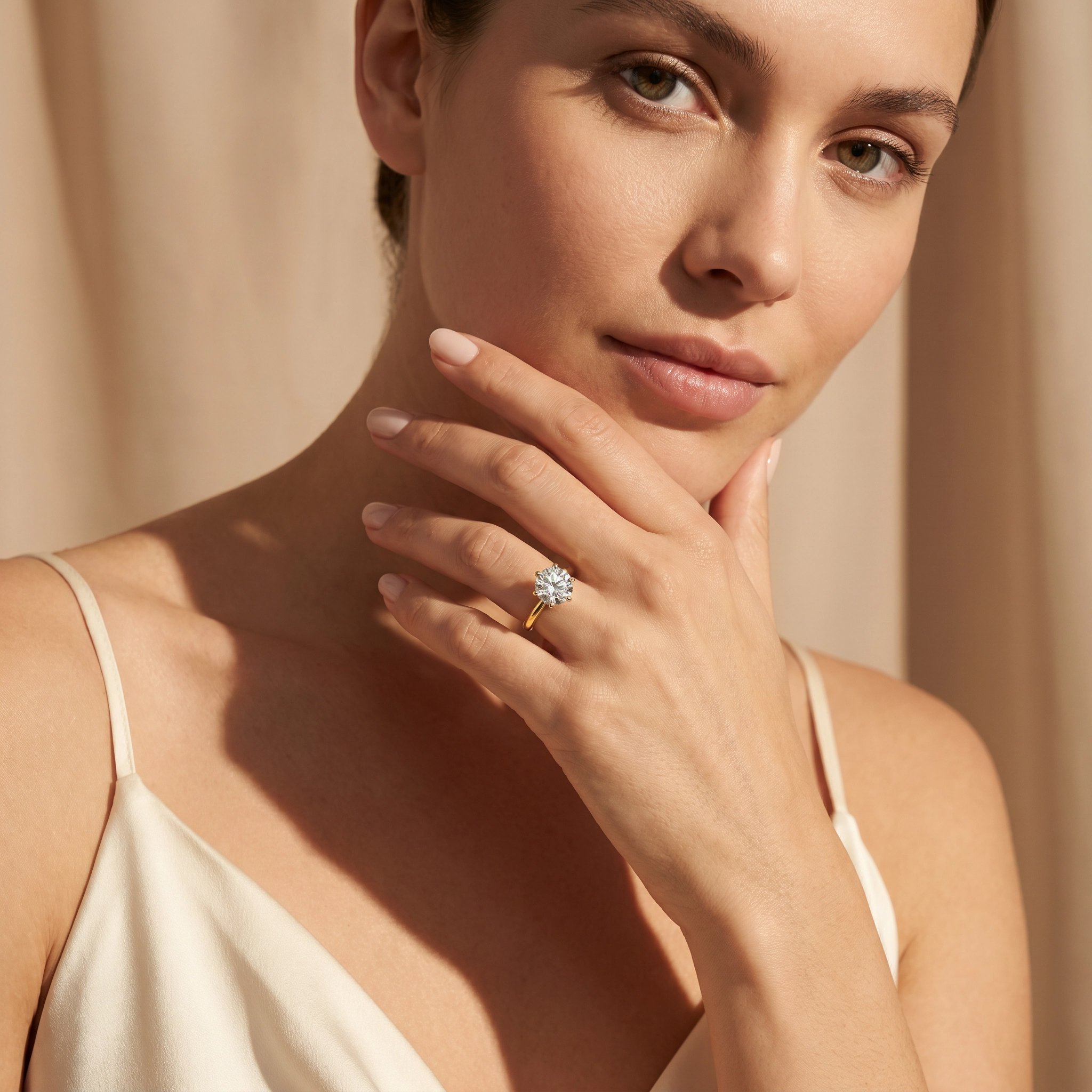
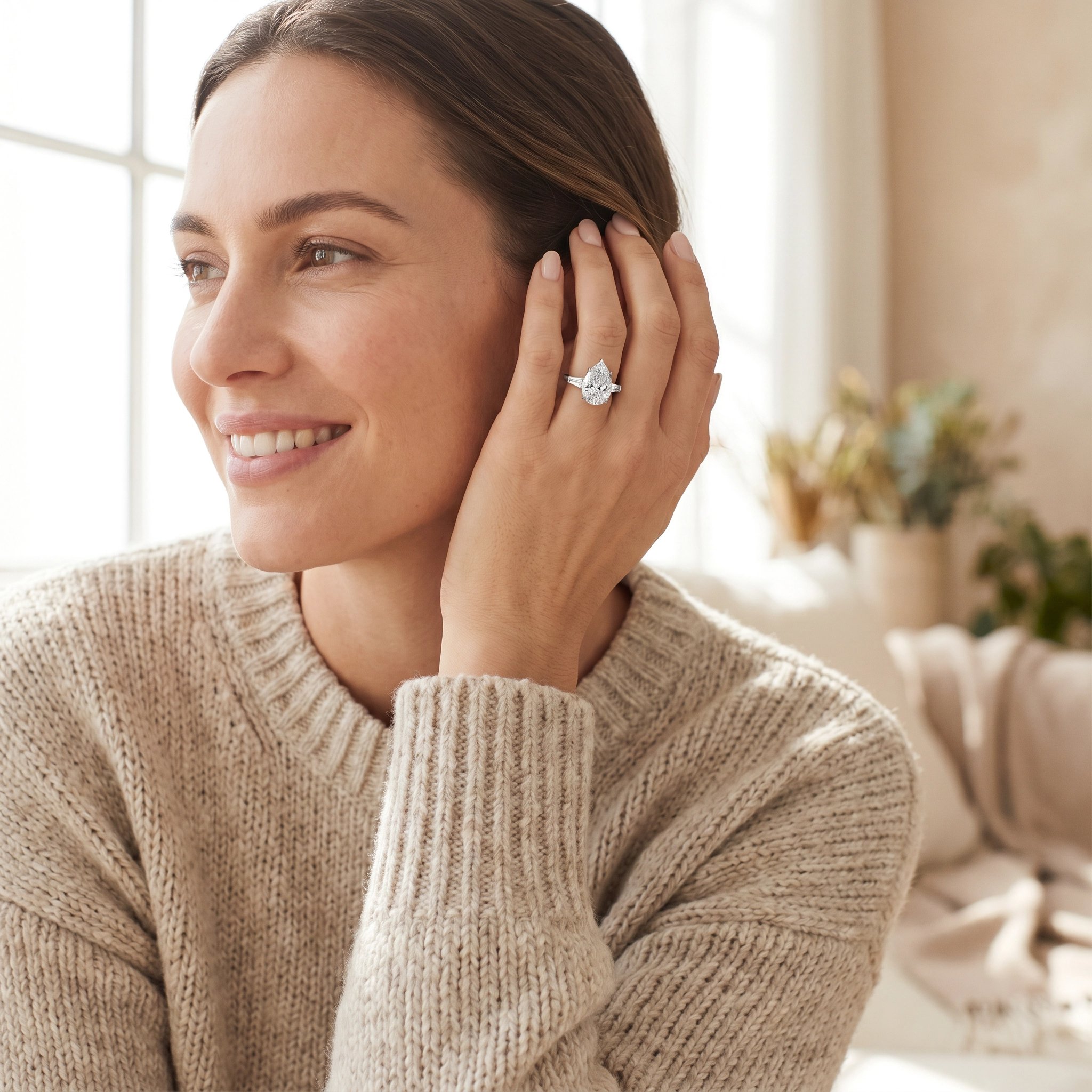
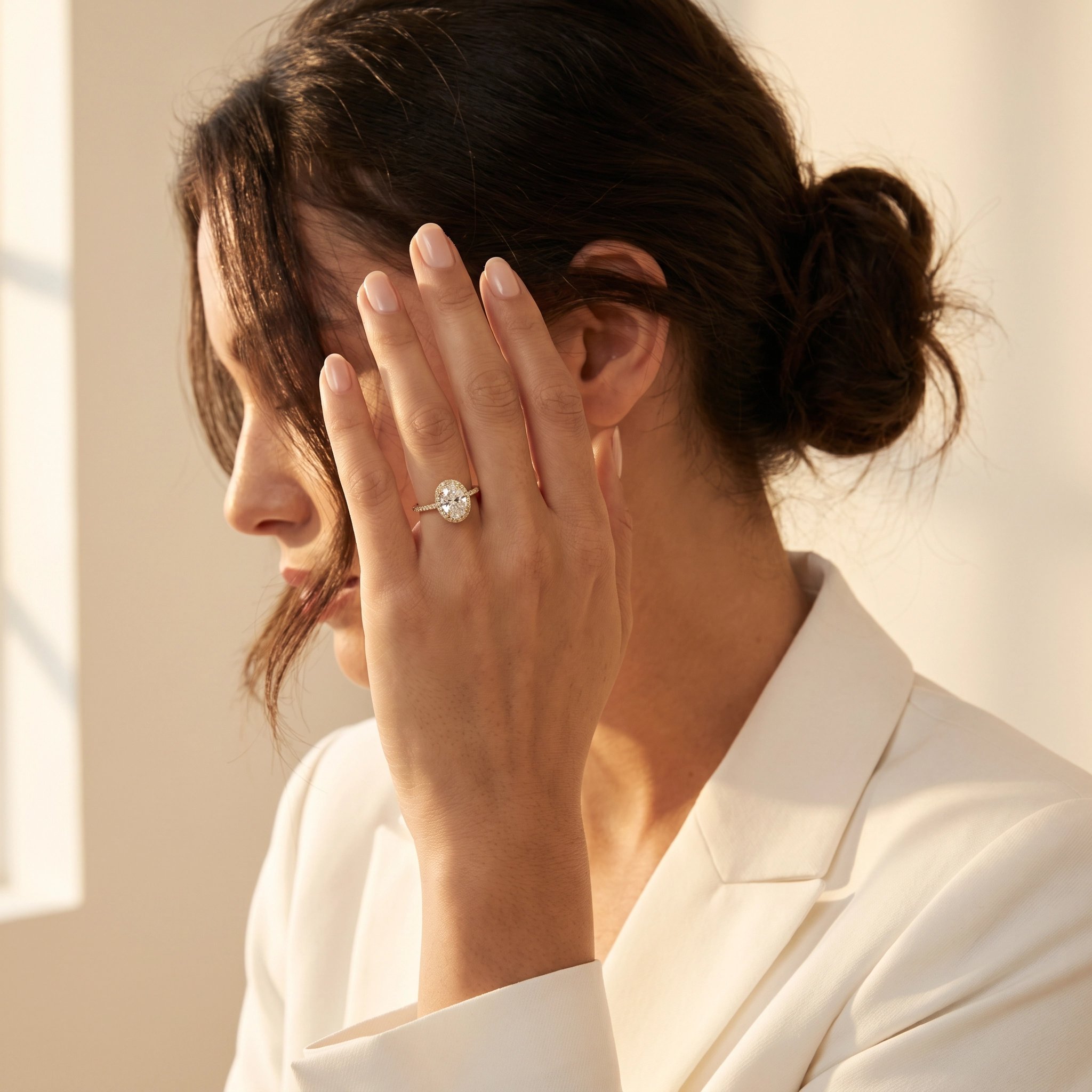
The most popular settings in 2026 include the solitaire (timeless, lets the stone speak), the halo (creates the illusion of a larger center stone), pavé (diamonds along the band for maximum sparkle), and the bezel (a modern, secure setting that encircles the stone in metal).
One piece of advice that many buyers wish they'd received earlier: think about your wedding band before finalizing the engagement ring. Some settings — particularly those with floating shanks or elaborate basket designs — don't allow a traditional straight band to sit flush. Consider the complete picture from the start.
Step 5: Find the Right Jeweler
Where you buy matters as much as what you buy. The ideal jeweler is someone who takes time to understand your preferences, explains your options without pressure, and stands behind their work with clear policies.
Many couples default to large online retailers for their pricing transparency — which is understandable. But independent local jewelers offer something that no website can replicate: the ability to see, touch, and try on rings in person, with an expert guiding the experience.
Ring Society connects couples with vetted independent jewelers who meet our certification standards. When you arrive at a Ring Society-matched jeweler, you're not starting from zero. You're arriving as an informed, confident buyer with a trusted introduction already made.
"The best ring is the one that fits your story — not someone else's budget or someone else's idea of what love should look like."
A Final Word
The engagement ring industry can feel overwhelming because it was, for a long time, designed to be. Complex terminology, opaque pricing, and high-pressure sales tactics all work together to leave buyers feeling confused and uncertain.
You don't have to navigate it that way. With the right education, the right budget framework, and the right local partner, buying an engagement ring can be one of the most joyful experiences of your life — as it should be.
We're here every step of the way.